Email: tinayu@cn-yj.com, ding@cn-yj.com
A Review of the Major Events in the Automotive Industry in 2019
2020-01-19
Author:
As the New Year’s Day of 2020 came to an end, 2019 officially became history. Although the Lunar New Year is still ahead, various reviews of 2019 have already started circulating widely on WeChat Moments. Brother Gang is joining in the fun and here’s a rundown of the “colorful” major events in the automotive world in 2019. If you think we’ve missed anything, feel free to leave a comment and help us fill in the gaps!
1
Domestic auto sales decline for the first time in 28 years.
Since 1990, China’s automotive market has shown a trend of year-on-year growth. After the turn of the millennium, the market experienced an explosive surge. However, this growth came to an abrupt halt with the release of statistical data for January 2019. Even more alarming is that the market downturn appears to have continued into 2019 itself. Judging from sales figures for the first 11 months of 2019, it seems likely that 2019’s sales will continue to decline. From this perspective, 2019 doesn’t seem to be a good year for Chinese automakers.

2
Car Issues Absent from the March 15 Gala
Every year For automotive companies’ public relations teams, the March 15 Gala is both a silent “torture” and an opportunity to demonstrate their PR capabilities. As of June 2019, China’s vehicle ownership had reached 250 million, with 66 cities having more than one million vehicles in circulation. China has truly become a major automobile power, and cars have now become products closely tied to consumers. Every year, there are numerous reports of automotive quality issues and related complaints. Unfortunately, the 2019 March 15 Gala did not choose to highlight automotive-related problems; however, this does not mean that there were no automotive issues in 2019.

3
The 660,000 Mercedes-Benz Hood Rights Protection Incident
Mercedes-Benz's In 2019, things were quite busy. Let’s set aside for now the vehicle recalls involving millions of units, as well as the axle failure incident with the E-Class—after all, neither of these garnered widespread attention across the internet. What truly made Mercedes-Benz “famous,” however, was a video showing a female owner protesting by sitting on her car’s hood to demand redress. This incident has opened up a new mode of consumer rights advocacy among domestic car owners. But let’s ask: When car owners encounter quality issues and find no resolution, how many people actually have the time and energy this female owner demonstrated? How many possess her courage? Perhaps after this episode, Mercedes-Benz’s PR team will step up their efforts to focus on public relations across various video platforms. I wonder: How many platforms will still dare to expose Mercedes-Benz’s problems in the future?

4
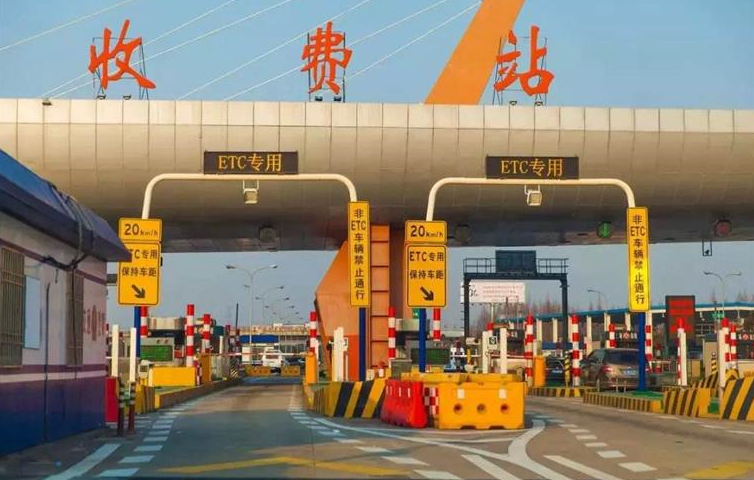
Nationwide rollout of ETC
On the one hand, China is experiencing a rapid increase in the number of vehicles on the road; on the other hand, traffic conditions are becoming increasingly congested. To alleviate this contradiction, the Ministry of Transport has drafted a document—commonly known as the plan to abolish highway toll stations and promote wider vehicle adoption. The ETC system, which was originally intended as a positive development, has in some regions led to a situation where drivers without ETC cannot exit the highway. Recently, two officials in Tianjin were also disciplined for forcibly promoting ETC. While promoting ETC is indeed a good thing, well... Brother Gang can only say: Drivers who haven't yet gotten ETC should hurry up and do it—after all, using it really is quite convenient.
5
Youth Auto That Runs Simply by Adding Water
In May 2019, Qinyou Automobile—a company that claimed its vehicles could run simply by adding water—became the subject of intense online debate. Pang Qingnian, chairman of Qinyou Automobile, asserted that 300 liters of water could power the vehicle for 300 kilometers, and that there was no restriction on the type of water used—seawater or even sewage would do just fine. During a live demonstration, Pang boasted that the water discharged by the vehicle was safe to drink. However, after the vehicle had been running for a while, no water actually came out, leaving the audience in an awkward silence. Soon afterward, experts from research institutions as well as industry leaders from major automakers publicly weighed in on the issue, all agreeing that mass production was simply impossible. As the controversy continued to escalate, it was also revealed that Qinyou Automobile had been collaborating with various local governments through a well-worn pattern: mostly by securing investments in local mining rights, land, and other resources. Whether Pang Qingnian liked it or not, he could no longer change the grim reality that he had been nailed to the pillar of shame in China’s automotive development history.

6
Toyota China Fined for Monopoly
On December 27, 2019, the Anti-Monopoly Bureau of the State Administration for Market Regulation issued the Administrative Penalty Decision in the monopoly case against Toyota Motor (China) Investment Co., Ltd., imposing penalties for its illegal monopolistic practices in the sale of Lexus-brand vehicles. As is well known, Lexus achieved impressive sales figures in China in 2019 and, contrary to market trends, raised its retail prices. For certain models, such as the Alphard, customers had to pay tens of thousands of yuan extra just to secure delivery—a phenomenon that has persisted for many years. However, this recent penalty is unrelated to the current situation.
The penalty stems from a period between June 2015 and February 2018, during which the regional manager of Toyota China instructed automobile dealers in Jiangsu Province to uniformly quote retail prices when selling Lexus vehicles on online platforms, prohibiting them from lowering prices at their own discretion. The regional manager provided specific guidance for different vehicle models, covering measures such as price reductions, maintaining original prices, adding premium accessories and interior enhancements, and charging extra fees. In accordance with relevant regulations, the competent authorities ultimately decided to impose a fine of 87.61 million yuan. Toyota China stated that it accepts this decision. Regarding this matter, Brother Gang expressed his support for the competent authorities’ law-based administration.

Summary
In 2019, the automotive industry saw so many events—some filled with anxiety, others with regret, some with anger, and still others with sadness. Different people experienced these events in their own unique ways. As a media professional, Brother Gang can only objectively document everything through his writing, providing fans with more information on new cars, car-buying advice, and driving experiences. At the same time, Brother Gang will continue, as always, to offer whatever assistance he can to those who are less fortunate and seeking to protect their rights. We hope that 2020 will bring even more positive developments to our automotive community.

Relevant Information

undefined
Contact Us
Ningbo Yongjia Auto Parts Co., Ltd.
Address: No. 5, Malang Highway, Mazhu Town, Yuyao City, Zhejiang Province
Phone:86-574-62462628,62451058,62461913,62481518
Fax: 86-574-62481398
Email:tinayu@cn-yj.com,ding@cn-yj.com
Website:http://www.cn-yj.com

Copyright © 2026 Ningbo Yongjia Auto Parts Co., Ltd. Powered by www.300.cn SEO